Compiled by Chuck Olson


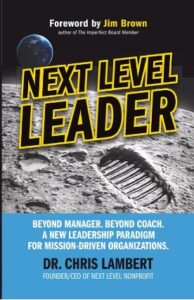
Best-selling author Chris Lambert in his thought-provoking and highly practical book Next Level Leader: Beyond Manager. Beyond Coach. A New Leadership Paradigm for Mission-Driven Organizations, states his purpose at the get-go:
This isn’t another management theory or leadership philosophy book. It’s a practical guide for leaders who are ready to stop operating as the smartest person in the room and start developing others to their full potential—leaders who ask great questions instead of supplying most of the answers, who build cultures where people don’t just survive but thrive, and who flourish rather than burn out because they develop proactive partners, not dependents.
From there, at its core, he provides a convincing roadmap for swapping the hat of manager (with “direct reports”) for the hat of coach (with “direct supports”).
Enjoy these Book Notes filled with street-level insights that will make you a better leader.

Chuck Olson
Founder
Lead With Your Life
Next Level Leader: Beyond Manager. Beyond Coach. A New Leadership Paradigm for Mission-Driven Organizations
Author: Chris Lambert
Copyright: 2026
Book Description:
The old model of leadership is collapsing: command and control, top-down authority, the heroic leader with all the answers. The results are everywhere. Burnout, turnover, disengagement, and mission drift. Working harder isn’t the answer. Leading differently is.
In Next Level Leader, Chris Lambert reveals the single most important shift any leader can make: the move from manager to coach. Drawing on years of developing mission-driven organizations, he offers not just inspiration, but the actual infrastructure (the frameworks, tools, and rhythms) that makes coaching leadership sustainable, scalable, and transformational.
This is leadership built to last. Instead of creating dependents who need you for every decision, you’ll develop capable people who think, grow, and lead on their own. Instead of holding everything together through sheer effort, you’ll build a culture that sustains itself and multiplies leaders long after you’re gone.
Book Quotes:
Many nonprofits are fueled by noble purpose but constrained by unhealthy leadership systems. The mission is worthy. The team cares deeply. The vision inspires. Yet somewhere along the way, exhaustion replaces energy, confusion weakens execution, accountability becomes inconsistent, and leaders find themselves carrying burdens they were never meant to bear alone. LOCATION: 116
This isn’t another management theory or leadership philosophy book. It’s a practical guide for leaders who are ready to stop operating as the smartest person in the room and start developing others to their full potential—leaders who ask great questions instead of supplying most of the answers, who build cultures where people don’t just survive but thrive, and who flourish rather than burn out because they develop proactive partners, not dependents. LOCATION: 170
The Next Level Nonprofit organizational operating system is a comprehensive framework for building and sustaining a healthy, high-performing nonprofit. It is built around four essential components:
• Team Unity: a staff that is fully aligned, trust-filled, and accountable.
• Compelling Vision: resolute clarity about why you exist, where you’re going, and what matters most.
• Right Strategy: a focused, realistic plan that turns vision into tangible priorities.
• Disciplined Execution: consistent habits and rhythms that ensure the right work actually gets done. LOCATION: 186
The Next Level Nonprofit operating system is a set of integrated tools, rhythms, and practices designed to create clarity, alignment, ownership, and sustained results—bridging the gap between strategic planning and strategic execution. LOCATION: 196
Gallup chairman Jim Clifton and chief scientist Jim Harter write in their insightful book It’s the Manager, “Of all the codes Gallup has been asked to crack dating back 80 years to our founder, George Gallup, the single most profound, distinct and clarifying finding—ever—is probably this one: 70% of the variance in team engagement is determined solely by the manager.” LOCATION: 248
Investing in the people we serve alongside is one of the most powerful ways we invest in the people we exist to serve. LOCATION: 269
The people we serve deserve leaders who develop other leaders so the mission can scale beyond any one person’s capacity. LOCATION: 277
Managing is reactive. It answers the question, “Did this get done?” Coaching is proactive. It answers the question, “What does this team member need to succeed?” LOCATION: 301
When we start thinking of the people we lead as direct supports, we stop asking, “What do I need from them?” and instead ask, “What do they need from me?” LOCATION: 375
A great executive coach spends far more time listening than talking. They resist the temptation to solve every problem or jump in too quickly with advice. Instead, they use questions to reframe challenges, guiding leaders to their own clarity, helping them think, not just act. An executive coach prioritizes reflection over direction. They help others detect patterns they couldn’t see on their own. They believe the answers are already inside those they work with, waiting to be discovered, not delivered. LOCATION: 489
Great nonprofit coaches blend both approaches. Discipline and curiosity. Structure and space. Teaching and evoking. Declaration and discovery. When we can hold that tension, integrating both the sports coach and the executive coach, we become something neither archetype is alone: a Next Level Leader. LOCATION: 524
A Next Level Leader is a coach who holds declaration and discovery together—developing each member of their team into a proactive partner who thinks, decides, and co-creates, so that leadership multiplies and impact scales. LOCATION: 531
The Next Level Leader Response: “What do you think is happening? What have you already tried? What do you think might work? What would you do if I weren’t here? What would success look like?” What just happened: You helped them think. They discovered their own solution. They leave with clarity AND increased capacity. Next time, they’ll be more confident solving the challenge on their own. Development. LOCATION: 560
The Next Level Leader Response: “Let’s talk about what happened. What were you trying to accomplish? Where did things go sideways? What did you learn? What would you do differently next time? How can I support you moving forward?” LOCATION: 568
The Next Level Leader Approach: “How are you, really? What have been the high points and low points of your week? What can we celebrate together? What’s been challenging? Where do you feel stuck? What would be most helpful from me right now? What’s one thing you’re learning about yourself in this season?” What just happened: A coaching conversation. Relational. You connected as humans, not as supervisor and subordinate. They felt known. They gained insight. The relationship deepened. Development happened. LOCATION: 576
Clarity is the foundation of strong teams, and we’ll build it by creating a Function & Accountability Overview (FAO). It’s a visual map of the entire organization (or your entire department if you’re responsible for a single department), showing every seat, the major functions of each seat, who is accountable for what, and how roles interconnect. LOCATION: 631
Now let me show you how to build your Function & Accountability Overview, step by step.
• Step 1: Determine the Seats You’ll Need in Your Department.
o Most leaders design their org chart for where they are right now. That’s a mistake. Design for the outcomes you’re committed to achieving in the next twelve months. This challenges you to think proactively, not reactively. You’re not just mapping what exists. You’re building what’s needed.
• Step 2: Define 4–7 Functions Per Seat (Keep Them Measurable).
o For each seat, list the major functions. Every seat on your team will have between four and seven major functions: the core responsibilities that define what that role actually is. Not fifteen. Not three. Between four and seven.
• Step 3: Create Titles That Honor and Attract Talent.
o A compelling job title communicates respect for the work, clarifies authority and accountability, and helps the right people recognize themselves in the role.
• Step 4: Determine Flow of Accountability.
o For every major function in your organization, there will be one person who is ultimately accountable for that outcome. Not a committee. Not “the team.” One—and only one—person.
• Step 5: Lastly, Determine If Someone on Your Team Is Right for That Seat. LOCATION: 641-675
As coaches, we ensure that every person on our team can answer four questions with confidence: What am I responsible for? How do I know if I’m succeeding? Who do I support? Who supports me? LOCATION: 690
Culture fit is a team member’s ticket onto the bus. If someone is a culture fit, we likely have the right person in our organization…Culture fit doesn’t mean hiring one particular personality type. Rather, it means the presence someone brings to their work and relationships consistently aligns with the organization’s stated values. LOCATION: 742
While culture fit answers who belongs on the bus, capacity fit answers where they belong. LOCATION: 755
Capacity may include factors such as time availability, emotional intelligence, technical skill, physical ability, and stamina. LOCATION: 764
What we need instead is what we call a Next Level Strategy: a simple, two-page working document that answers two questions—Where are we going? and How do we get there?—in language accessible and inspiring enough that even our newest team members can explain it with confidence and conviction. LOCATION: 897
People don’t just want tasks; they want work that matters. When someone understands how their daily work connects to the larger mission—when they see how their financial report, phone call, or meeting changes lives—they become more engaged, motivated, and willing to grow. Vision gives meaning to the mundane. LOCATION: 909
As coaches, we regularly connect the dots between upstream activities and downstream impact. And we expect that every team member—not just the executive leadership team—can articulate five things with clarity and conviction:
• Why the organization exists.
• What it does.
• How it does it.
• What success looks like three years from now.
• A bold ten-year moonshot that is ambitious enough to inspire and realistic enough to pursue. LOCATION: 912
Once direct supports own the vision, the next coaching opportunity is helping them understand their specific role in achieving it. This is where strategy becomes personal. Strategy invites every person on the team to answer two questions: How will we get there—and what’s my role in it? LOCATION: 936
In quarterly one-on-ones, coach each direct support to set 4–7 quarterly priorities that meaningfully advance organizational and departmental goals. Each priority will support the strategic plan and be SMART—specific, measurable, ambitious, realistic, and time-bound (completable within ninety days). LOCATION: 945
The cascade will be clear and intuitive: Organizational Vision → Organizational Annual Goals → Organizational Quarterly Priorities → Departmental Quarterly Priorities → Individual Quarterly Priorities. LOCATION: 953
When direct supports own the vision and align their work to the strategy, something changes. They begin making better decisions without checking with their coach on everything. They become proactive partners, filtering choices through the mission. They know what deserves focus—and what can be set aside. They communicate compelling vision with donors, volunteers, partners, and community members because they genuinely believe it. And they stay motivated when the work gets hard because they’re convinced it matters. LOCATION: 990
The best coaches are often described as tough—but that toughness is never the whole story. The coaches who leave a lasting mark are the ones who pair high expectations with deep care, who push their teams hard while providing enough affirmation to keep them motivated, not demoralized. They know that neither comfort nor pressure alone prompts healthy growth and development. Coaching lives in the tension between challenge and encouragement, between calling people to more and reminding them they are already seen and valued. Learning to hold that tension well is one of the most important skills a Next Level Leader can develop. LOCATION: 1012
Affirmation is not fake positivity or empty praise. It’s the genuine, consistent expression of care for our direct supports as whole human beings—who they are right now, not just who we hope they’ll become. LOCATION: 1022
Challenge, on the other hand, is not cruelty or nitpicking. It’s seeing what our direct supports are capable of—sometimes before they can see it themselves—and calling them toward that higher level. LOCATION: 1028
• Thriving culture lives in the upper-right quadrant: high affirmation and high challenge.
• Cozy culture lives in the upper-left quadrant: high affirmation, low challenge. People in these environments feel comfortable, appreciated, and safe—but unchallenged and stagnant.
• Stressed culture lives in the lower-right quadrant: low affirmation, high challenge. This environment can produce short-term results, but it causes long-term damage.
• Apathetic culture lives in the lower-left quadrant: low affirmation and low challenge. This is the worst-case scenario—and it’s more common than we’d like to admit. LOCATION: 1038-1058
Here’s the truth at the heart of this entire framework: Affirmation without challenge is enabling. Challenge without affirmation is cruel. But affirmation with challenge—consistently held together, in tension—is coaching. LOCATION: 1116
Great coaches don’t dispense answers; they cultivate insight. LOCATION: 1162
Let’s start by defining the two approaches to leadership: Didactic leadership is teaching by telling. “Here’s what you need to do. Here’s how to do it. Here’s why it matters.” Socratic leadership is teaching by asking. “What do you think you should do? What have you already tried? What would success look like?” LOCATION: 1165
In my experience, most leaders talk about 80 percent of the time and listen about 20 percent. But Next Level Leaders flip that ratio, listening and asking probing questions about 80 percent of the time and teaching and telling only about 20 percent. They focus on helping others discover insight, not merely downloading information. LOCATION: 1206
Deep listening looks different than waiting or preparing for our turn to talk. We’re focused entirely on the other person: no phone, no email, no distractions. We’re listening not just to the words but to what’s beneath them, what emotions are present, what isn’t being said, what the real opportunity (issue) actually is. LOCATION: 1242
There’s an African proverb that encapsulates the heart of this chapter: “If you want to go fast, go alone; if you want to go far, go together.” LOCATION: 1343
Psychological safety—the belief that you can speak up, admit mistakes, ask questions, and be yourself without fear of punishment, humiliation, or rejection—is the relational foundation of organizational effectiveness. LOCATION: 1370
Learner safety is the belief that it’s safe to ask questions, make mistakes, and grow without being shamed for not already knowing something. It’s the footing that makes a learning culture possible. LOCATION: 1440
Contributor safety is the belief that it’s safe to take initiative, share ideas, and speak up, and that doing so won’t result in being shut down, ignored, or publicly dismissed. This is the footing that separates a team that can follow directives from a team of proactive partners who bring their own ideas and expertise to the table. LOCATION: 1454
Challenger safety, “I can push back without consequence.”…This is the belief that it’s safe to question decisions, challenge the status quo, and respectfully disagree with leadership, without social or professional punishment. This is where great organizations are made and where mediocre ones stay stuck. LOCATION: 1469
Trust is built slowly but lost quickly. LOCATION: 1538
Full ownership, from whoever caused the harm, rebuilds trust faster than anything else. LOCATION: 1554
Trust isn’t rebuilt in one conversation. It’s rebuilt through consistent, trustworthy behavior over time. LOCATION: 1559
Next Level Leaders build trust relentlessly, through vulnerability, consistency, honesty, follow-through, presence, and genuine care. When our team trusts us, coaching becomes natural. When they don’t, coaching becomes impossible. LOCATION: 1564
Part of our role as Next Level Leaders is to help willing direct supports shift from limiting beliefs to liberating ones—not replacing external work, but recognizing that internal work fuels it. This chapter explores three layers of the inner game, each building on the last. LOCATION: 1590
• LAYER 1: WHAT WE BELIEVE ABOUT OUR ABILITIES
• LAYER 2: WHAT WE BELIEVE ABOUT OUR PROGRESS
• LAYER 3: WHAT WE BELIEVE ABOUT OUR WORTH LOCATION: 1590-1666
We can help the people we lead passably function as someone they are not, or we can help them develop their strengths into something that looks like a superpower. Research supports what my own experience has confirmed: People grow most in their areas of strength. When we invest there, they grow faster, feel more confident, and stay more engaged. When we focus primarily on fixing weaknesses, improvement tends to be marginal—and unmotivating. LOCATION: 1717
Great coaches don’t just know how to coach. They know who they’re coaching and where that person is right now. LOCATION: 1802
• Stage One: Unconscious Incompetence: They don’t know what they don’t know…What this person needs from you: Declaration and direction. Clear expectations. A model to follow. Explicit coaching on how to do the work, not just what the work is.
• Stage Two: Conscious Incompetence…Your direct support is deep enough into the work to see exactly how much they don’t know. The gap between where they thought they were and where they actually are has become impossible to ignore…Your coaching posture in Stage Two will be high declaration with high discussion and high accessibility. You’re not backing away, you’re leaning in. You’re spending more time with them, not less.
• Stage Three: Conscious Competence…They know what they’re doing. They’re doing it well. But it still requires focus and intentionality. The skill isn’t automatic yet.
• Stage Four: Unconscious Competence…Your direct support is no longer thinking through every step. They’re just doing it. The skills they struggled to develop have become second nature. They handle complexity with wisdom. They anticipate problems before they become crises. LOCATION: 1816-1880
Great coaches aren’t just good at developing people. They’re good at reading where a specific person is in a specific area, right now. And they adjust their style accordingly. LOCATION: 1957
This chapter is about the inner work that determines the quality of everything we do. While the work is often unseen, nothing shapes our leadership more visibly. It’s the foundation beneath everything we’ve explored together. At the center of that inner work is self-awareness—the ability to see ourselves clearly and honestly. LOCATION: 2152
According to organizational psychologist Tasha Eurich, “95 percent of people think they’re self-aware, but only 10–15 percent actually are.” LOCATION: 2157
In my experience, there are two kinds of self-awareness worth developing, and the work of cultivating them is more significant and more uncomfortable than many leadership development programs let on.
• Emotional Self-Awareness…The first is emotional self-awareness, the ability to identify in real time what we’re actually feeling, not a sanitized version of it.
• Behavioral Self-Awareness…The second is behavioral self-awareness, knowing our patterns before others have to point them out. How do we show up when we’re stressed? How do we respond when we feel threatened? How do we move through conflict or overwhelm? But equally important: How do we show up when we’re at our best? What does it look like when we’re fully alive in our work, operating from our deepest strengths, and leading from a place of genuine wholeness? LOCATION: 2165-2186
Burnout is one of the greatest threats to nonprofit leaders, and it rarely hinges on workload alone…None of us are capable of coaching effectively from an empty tank, and pretending otherwise doesn’t make us more dedicated; it just makes the crash more spectacular. LOCATION: 2206
Therapy tends to go deeper into the roots, exploring where our patterns came from and why they formed. Executive coaching tends to be more forward-focused, helping us translate self-awareness into more effective leadership behavior. Both are valuable. For many leaders, both are necessary. LOCATION: 2253
The leaders who last—who build something enduring, who develop people deeply, who finish well—aren’t the ones who discover a shortcut or crack the code. They’re the ones who stay faithful in the small things when no one is watching. Who keep showing up even when it’s hard. Who resist the pull toward trends and shortcuts and just keep walking. LOCATION: 2315

Chuck Olson
More Book Notes
Compiled by Chuck Olson
Compiled by Chuck Olson
Compiled by Chuck Olson
Sign Up for Free Resources via Email